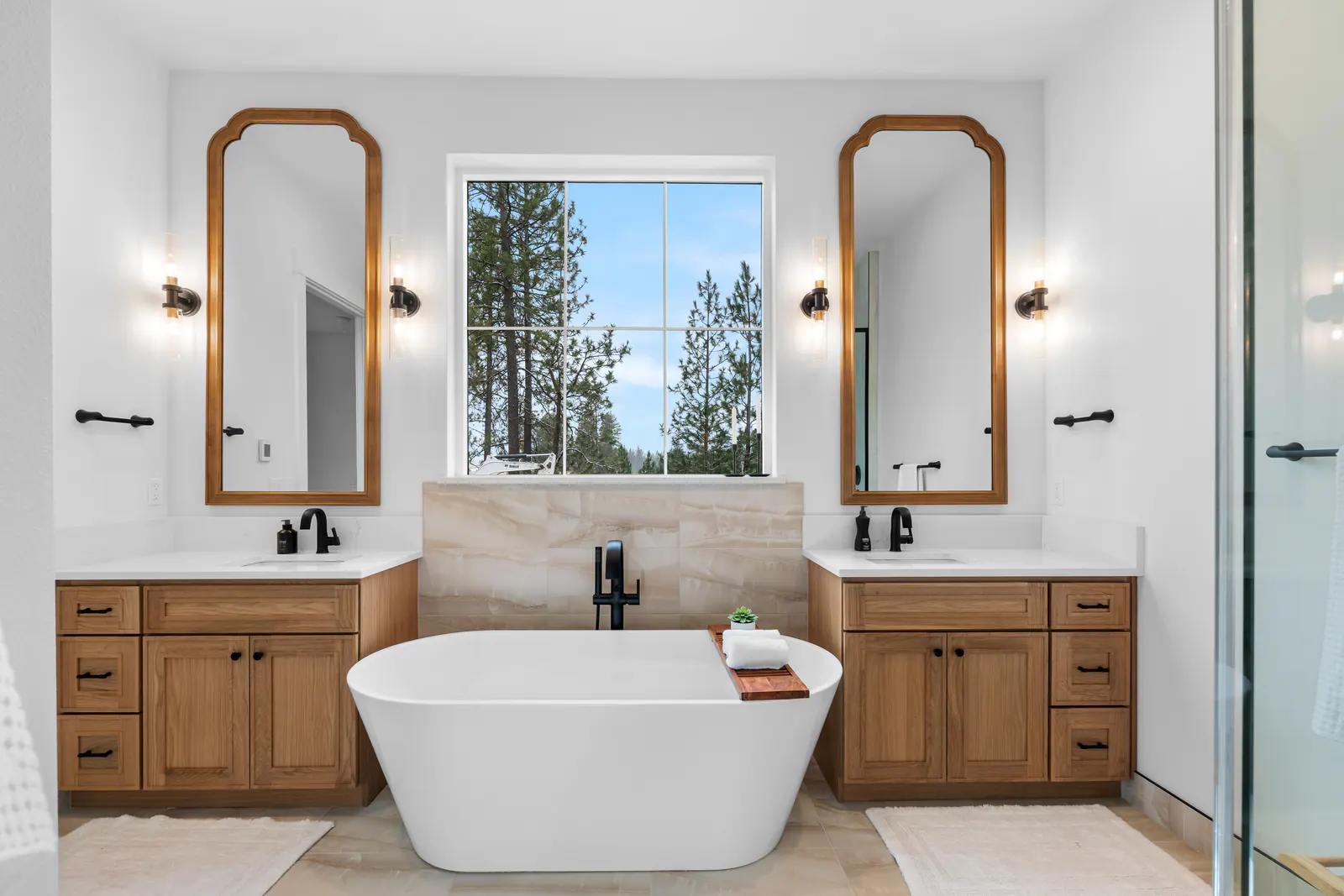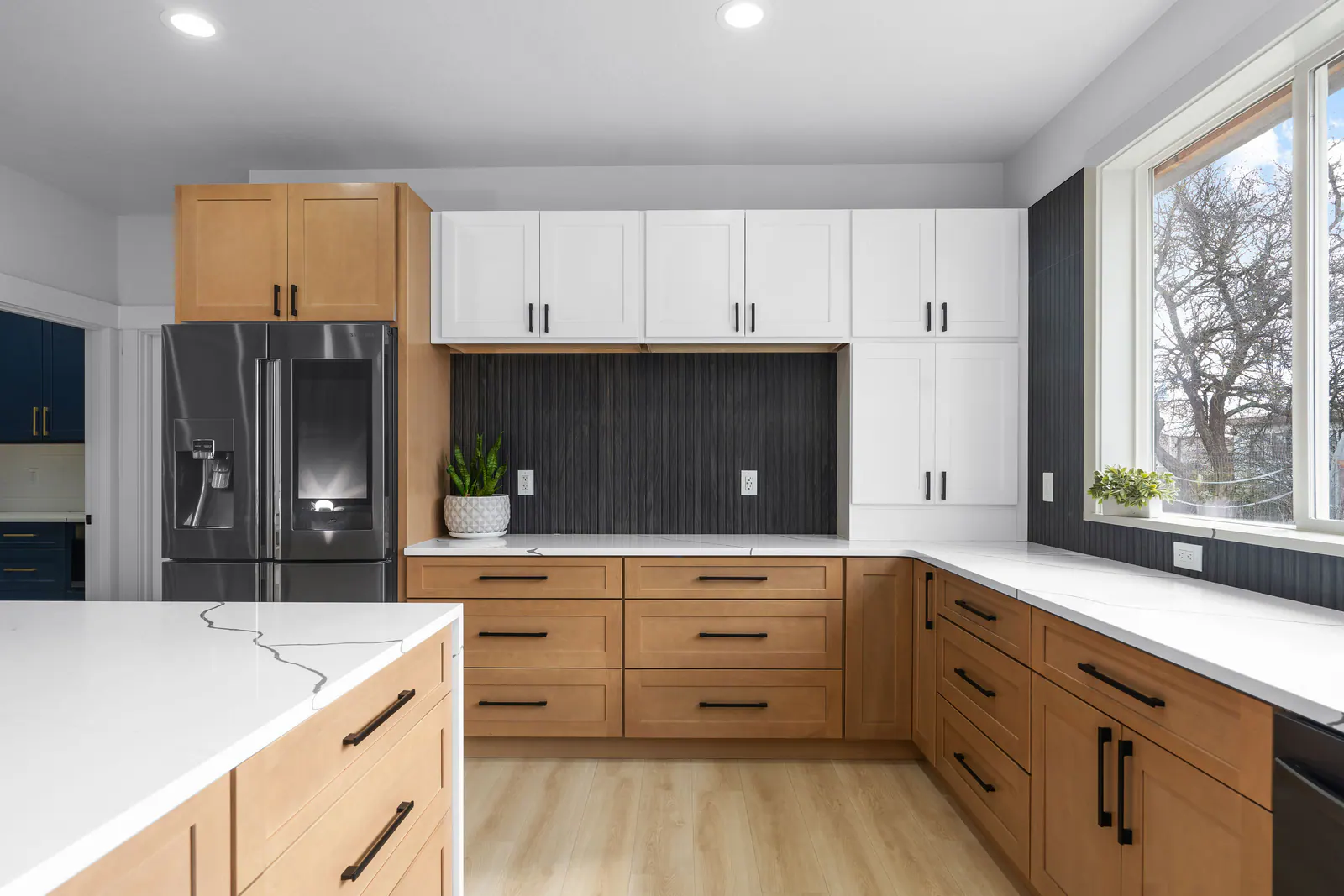

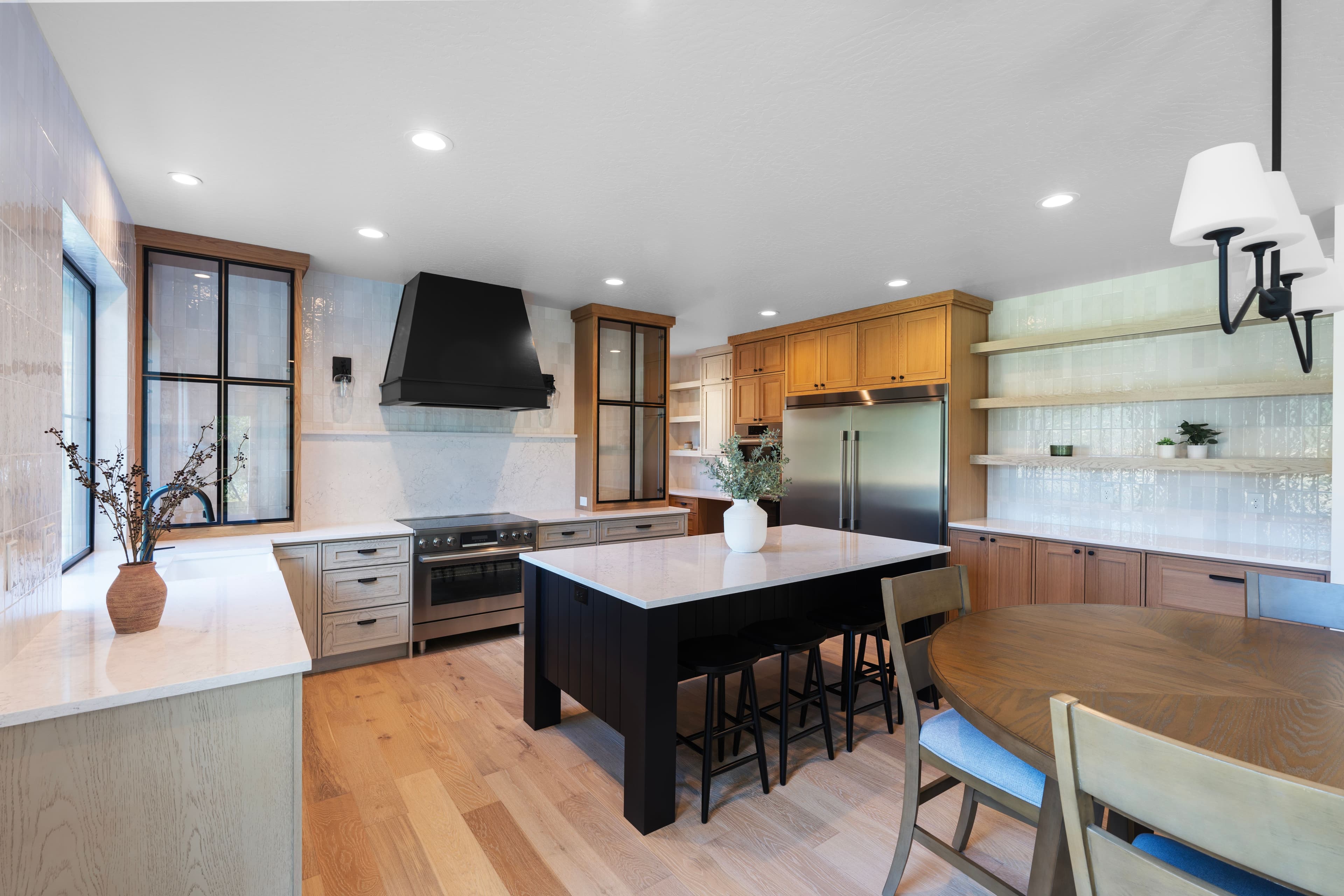
Cabinets do more work than almost anything else in a kitchen. They hold your day-to-day life, set the tone of the room, and quietly take a beating from steam, spills, and door slams for years. A little knowledge up front goes a long way — both for keeping the cabinets you have looking sharp and for choosing well when it's time for a remodel.
This guide covers three things: how to care for cabinets so they age gracefully, the practical differences between the main cabinet construction types, and the kitchen layouts we see most often in Spokane homes.
Cabinet Care and Maintenance
Most cabinet damage we see in older kitchens isn't from accidents — it's from small habits that add up. Keep these basics in mind and a good set of cabinets will easily outlast the rest of the kitchen.
Spills and Splashes
Wipe up spills the moment you see them. Water, coffee, wine, and citrus juice can all work into a finish if they sit, especially around the sink and the dishwasher.
- Blot, don't rub. A clean dry cloth pulls liquid up; rubbing pushes it sideways and into the seams.
- Dry the surface fully after cleaning. Standing moisture is what causes the swelling and lift you sometimes see at the base of cabinet panels.
- Pay extra attention to the toe-kick under the dishwasher and the sink base — those are the two spots that quietly take on water for years.
Routine Cleaning
For day-to-day cleaning, simple is better. A soft cloth, warm water, and a few drops of mild dish soap will handle almost everything.
What to avoid:
- Bleach, ammonia, or anything labeled "heavy duty degreaser."
- Petroleum solvents and oven cleaners — even a stray splash can dull or strip a finish.
- Scouring pads, steel wool, or scrub powders.
- Dishcloths that have been used on greasy pans (the residue transfers right onto the door).
If your cabinet line came with a recommended cleaner, use it. Manufacturers test their finishes against specific products and the warranty often references them.
General Care
A few habits that make the biggest long-term difference:
- Don't park toasters, kettles, or coffee makers directly under wall cabinets that get heat or steam.
- Skip the habit of draping wet dish towels over cabinet doors.
- Close doors and drawers gently — soft-close hardware does the work for you, but slamming wears the hinge faster than the panel.
- Touch up small chips before they spread. Most lines offer a matching pen or putty.
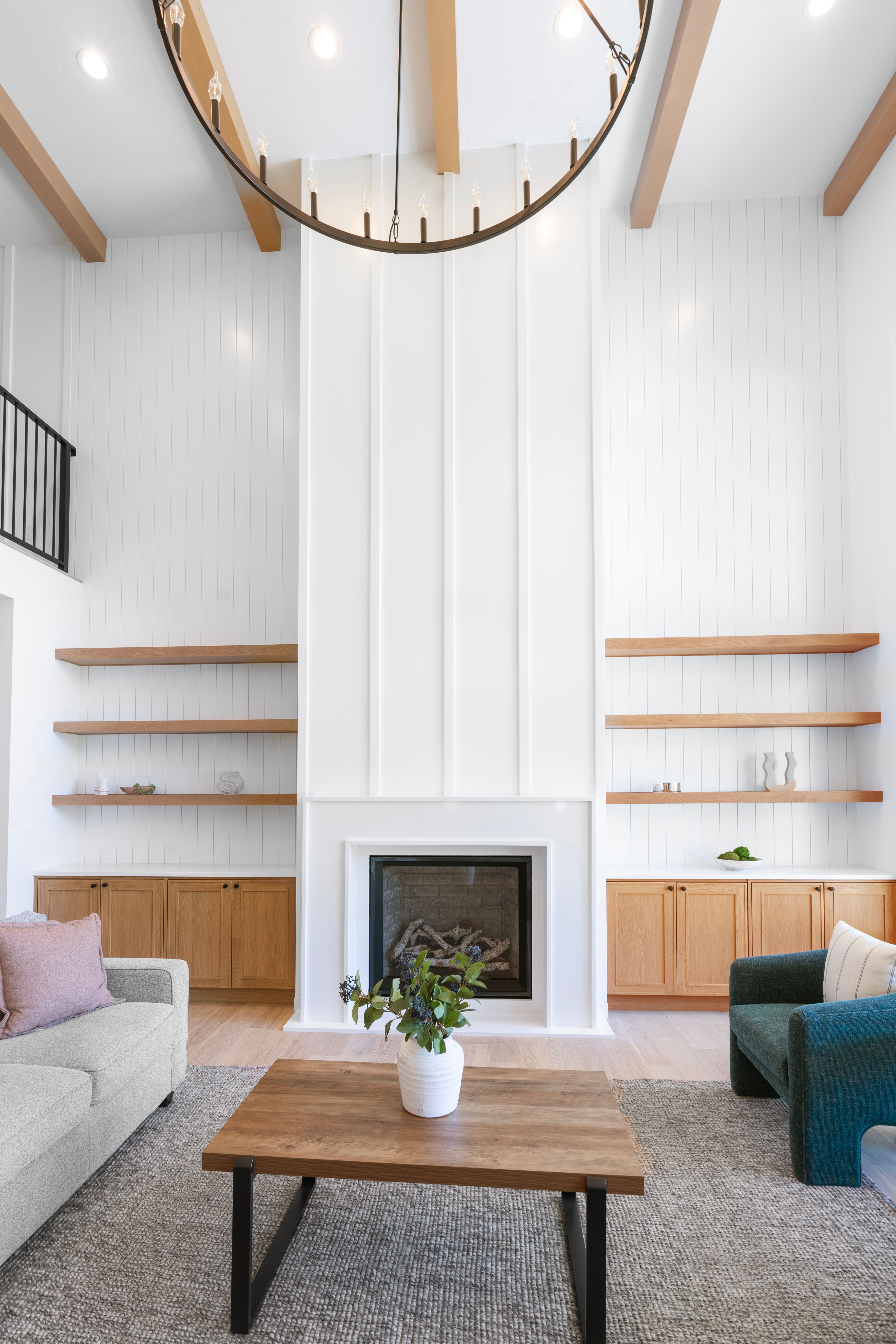
The Four Main Cabinet Types
When people compare "cabinets," they're usually comparing four different construction tiers. Each one is a real fit for the right project — the trick is matching the tier to your timeline, budget, and how long you plan to live with the result.
Ready-to-Assemble (RTA)
Flat-pack boxes that ship from a warehouse and go together with cam-locks and screws. You'll see them at the big home stores and online.
- Best for: Quick refreshes, rentals, garages, secondary spaces.
- Tradeoffs: Limited sizes, thinner panels, and a finish that's usually fine but rarely premium.
- Worth knowing: Assembly quality matters. A racked box never hangs straight, and that's nearly impossible to hide once the doors go on.
Stock Cabinets
Pre-built in fixed sizes by the manufacturer. They arrive ready to install and come in a manageable list of door styles and finishes.
- Best for: Standard layouts on a tight budget.
- Tradeoffs: Sizes step in three-inch increments, which can leave odd fillers in irregular rooms.
- Worth knowing: Materials vary widely between brands — particle board with laminate at the lower end, plywood with painted MDF doors at the higher end.
Semi-Custom
The sweet spot for most Spokane remodels. You pick from a wide library of door styles, finishes, and modifications — depths, heights, drawer configurations, accessories — but the boxes are still produced on a manufacturing line.
- Best for: Real kitchen remodels where layout flexibility matters.
- Tradeoffs: Lead times are longer than stock and shorter than full custom.
- Worth knowing: Pricing usually includes installation, which makes the apples-to-apples comparison against RTA more honest.
Custom
Built to your exact dimensions and finish, often by a local cabinet shop. Every drawer width, every angle, every wood species is a choice.
- Best for: Unusual rooms, period homes, and clients who want something specific that no catalog covers.
- Tradeoffs: Cost and lead time. Custom is the most expensive route and the slowest.
- Worth knowing: The "custom" label gets used loosely. Ask whether the boxes are actually built to your dimensions or whether the line just offers more modifications than a typical semi-custom.
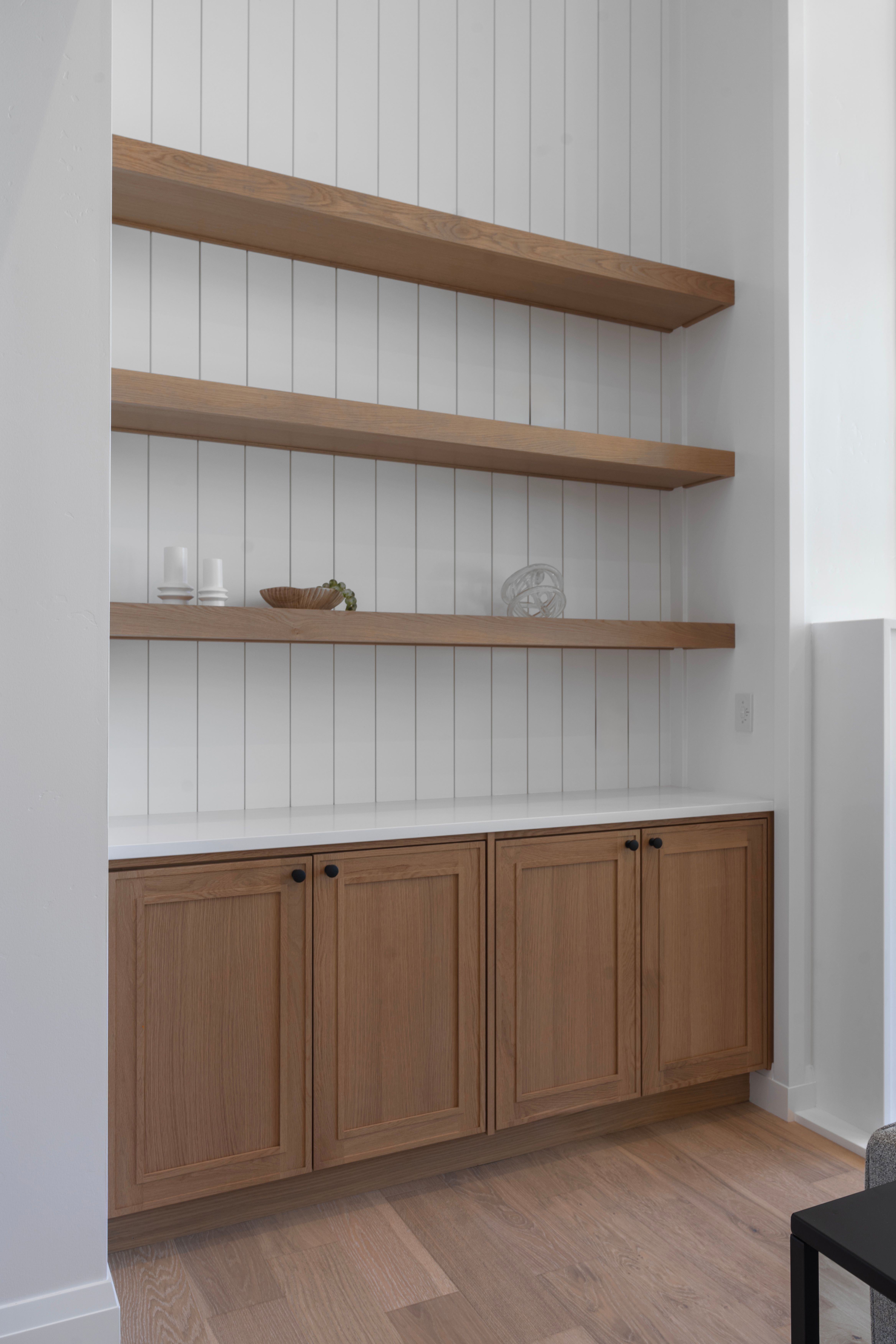
Kitchen Layouts: Which One Fits Your Space?
The layout decision usually drives everything else — the number of cabinets, the countertop square footage, even how much room you have for an island. Here are the four shapes we lay out most often.
Galley Kitchen
Two parallel runs of cabinets with a working aisle in between. The name comes from ship kitchens for a reason — every step is short.
Pros
- Highly efficient. Sink, range, and fridge stay close together.
- Works in narrow homes where wider layouts aren't possible.
Cons
- Counter and storage space are capped by the wall length.
- No room for an island or a true breakfast bar.
L-Shaped Kitchen
Cabinets along two perpendicular walls. Probably the most flexible layout overall — works in small condos and large open-plan rooms alike.
Pros
- Uses corner space well, especially with blind-corner pull-outs or a Lazy Susan.
- Leaves room to add an island when the floorplan allows.
Cons
- Needs careful planning at the corner to avoid wasted depth.
- Two long runs mean more cabinetry, which can push the budget.
U-Shaped Kitchen
Cabinets on three walls. The classic "work triangle" shape — sink, range, and fridge each get their own leg.
Pros
- The most counter and storage space per square foot of any layout.
- Comfortable for two cooks at once.
Cons
- Requires a wider room to feel open rather than boxed in.
- Two corners means two potential dead zones if the cabinet selections don't address them.
Island Layout
A freestanding cabinet run with countertop on top, usually paired with a one-wall, galley, or L-shaped perimeter. Islands have stayed popular because they solve a few problems at once.
Pros
- Adds prep space, hidden storage, and seating in a single piece of cabinetry.
- Becomes the natural gathering spot for guests and family.
Cons
- Needs roughly 42 inches of clear floor on every side to feel comfortable.
- Plumbing or a cooktop in the island raises the install cost meaningfully.
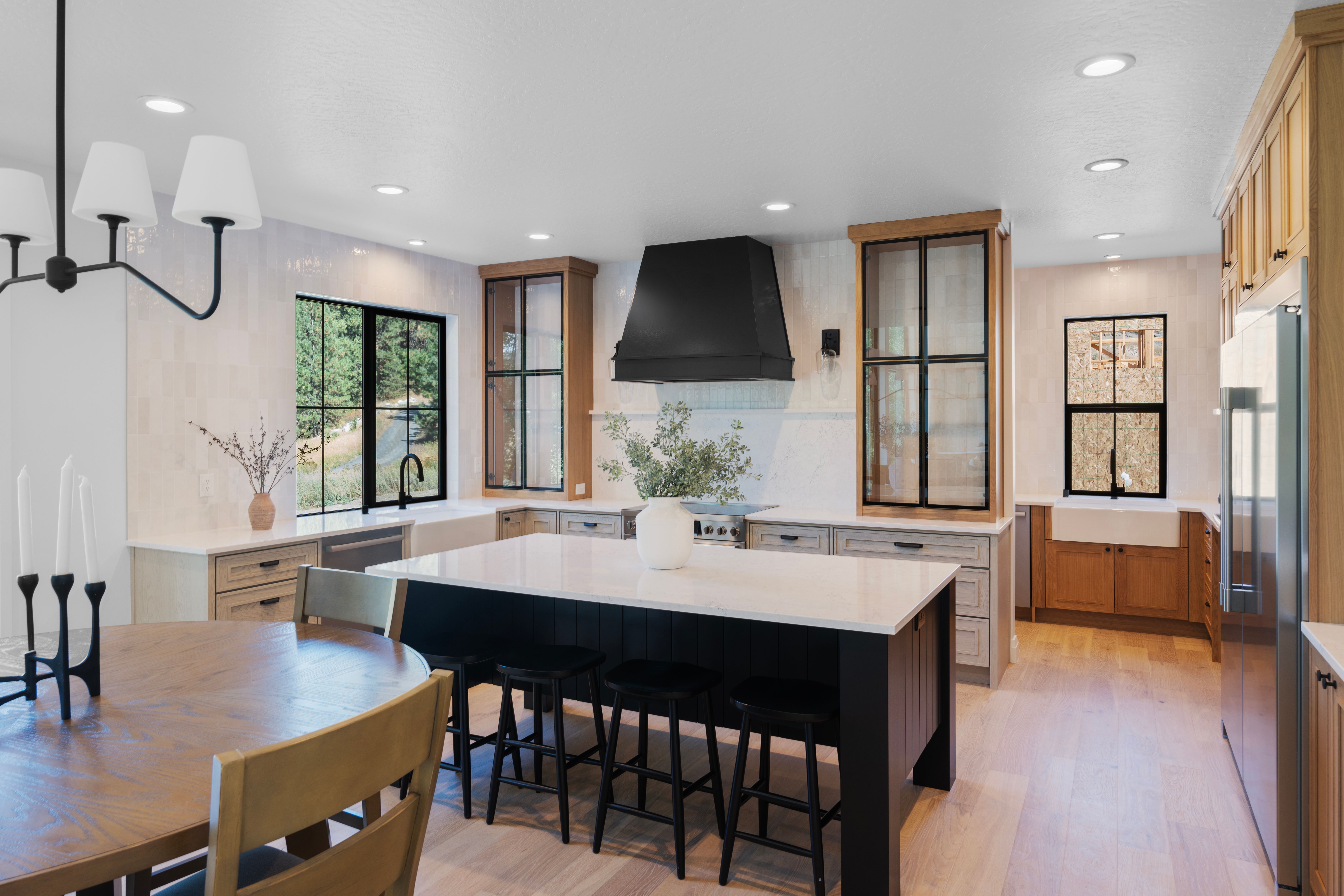
Putting It Together
A great kitchen is rarely about one perfect choice — it's a handful of decisions that work together. The cabinet tier you pick should match the layout, the layout should match how the room is actually used, and the finish should hold up to the cleaning routine you'll realistically follow.
If you're at the start of that process, the easiest next step is to come look at samples in person. Doors, finishes, and box construction all read very differently in your hand than they do in a photo.
Stop by 4630 E Sprague Ave, Spokane, WA, give us a call at (509) 218-3349, or send us a message — we're happy to walk through options without pressure. You can also browse our cabinet collections or recent Spokane projects for more layout and finish ideas.